What are the different types of watch movements?
Beneath the dial of every watch works a mechanism that defines how it measures time.
That mechanism is the movement, and understanding it is the best way to appreciate what sets one timepiece apart from another.
In this article we look at the types of watch movements that exist, how each one works and what distinguishes them from one another.
What a watch movement is and why it is also called a calibre
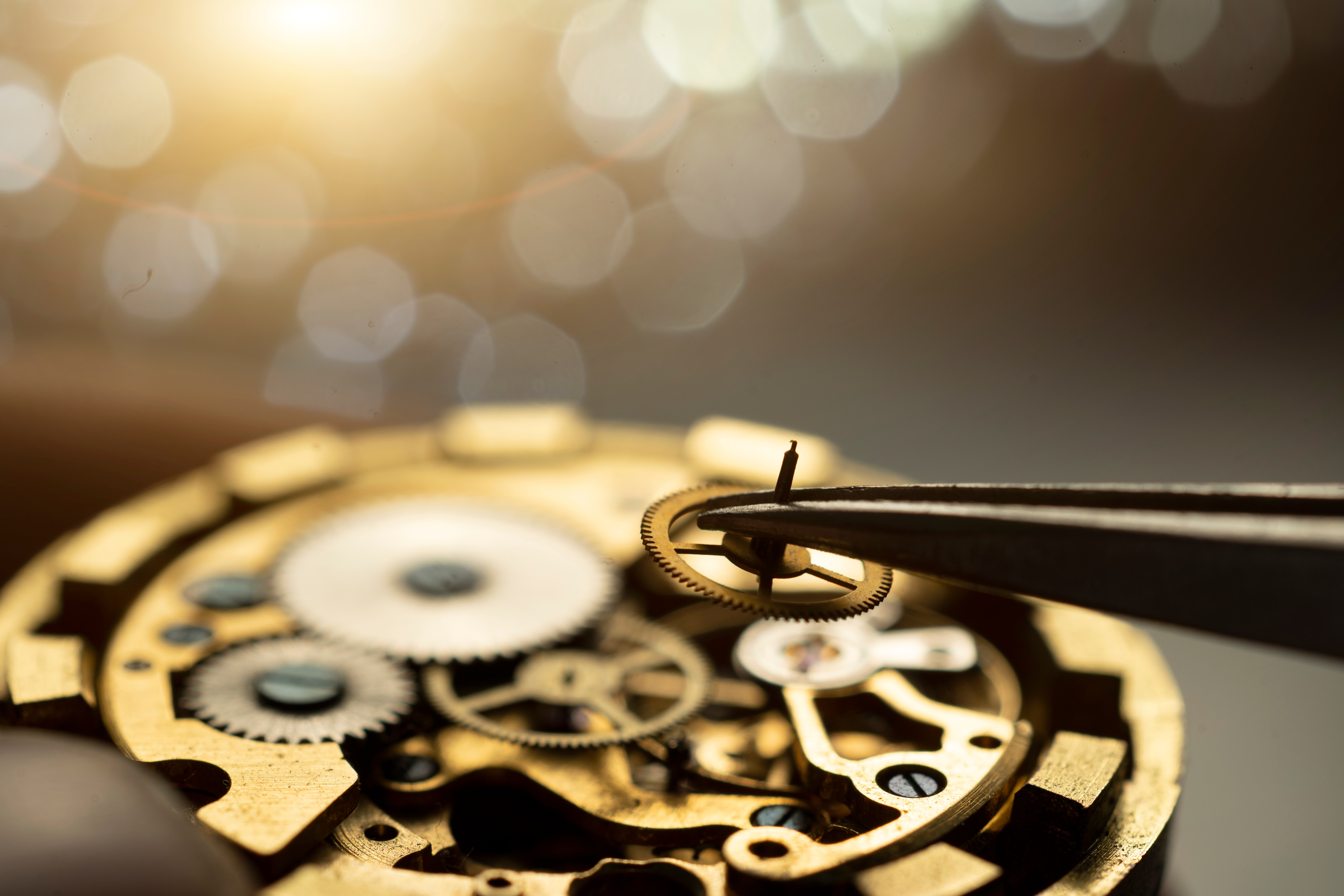
In watchmaking, the movement is the internal mechanism that drives the hands and the watch’s other functions, from the calendar to the chronograph.
Watchmakers also call it the calibre, a term used today to name each specific model of movement.
The classification of movements comes down to a simple question: where does the watch get its energy from?
Depending on the answer, we speak of mechanical movements or quartz movements.
Mechanical movements: the heart of traditional watchmaking
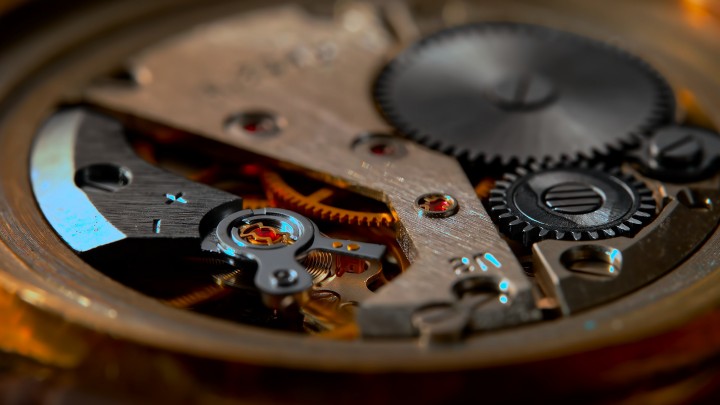
Mechanical movements are the oldest, and they all share the same principle: a mainspring stores energy as it is wound and releases it gradually through a gear train, while the regulating organ meters out that energy so the hands advance with precision.
The difference between its two variants lies in how that spring is wound.
Hand-wound mechanical movement
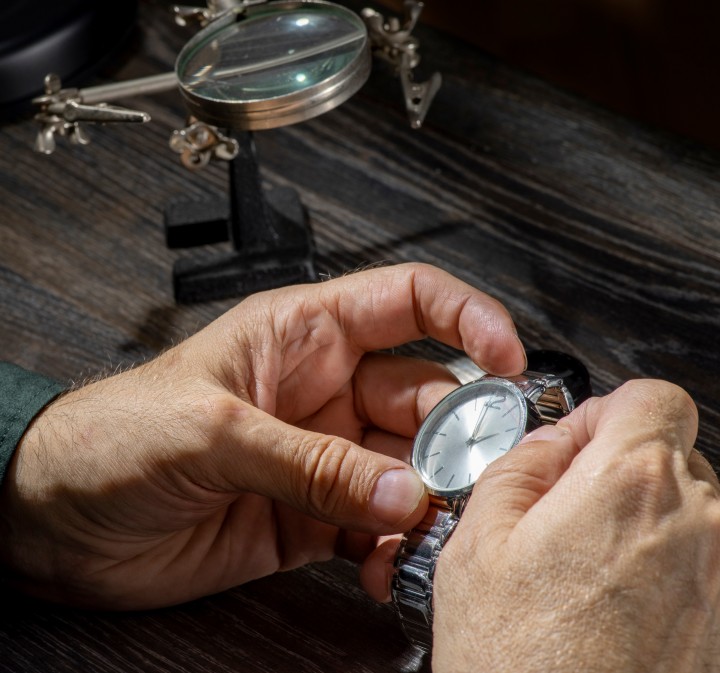
The hand-wound movement is the most venerable system in wristwatch making.
The wearer turns the crown to wind the mainspring and, as it unwinds, the energy is transmitted to the gears that drive the hands.
When the tension runs out, the watch stops and needs to be wound again.
That power reserve typically sits between 40 and 80 hours depending on the calibre, which in practice means winding the watch every day or two.
For many enthusiasts, that daily gesture is part of the appeal, a ritual that connects them with watchmaking tradition. In return, hand-wound calibres allow for slimmer constructions by dispensing with additional components.
Self-winding mechanical movement
The self-winding, or automatic, movement solves the hand-wound movement’s main drawback.
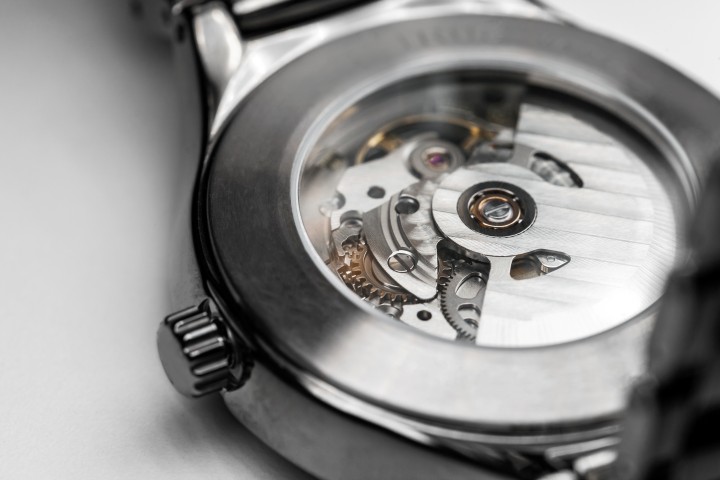
It incorporates a rotor, a semicircular component that spins with the natural motions of the wrist and winds the mainspring without any intervention from the wearer.
As long as the watch is worn regularly, it keeps itself running.
If the watch goes unworn for several days, the power reserve runs down and it stops, but thisis no problem at all for the mechanism: a few turns of the crown and a quick reset of the time are enough to bring it back to life.
This is the field in which TUDOR deploys the full extent of its watchmaking expertise today.
The TUDOR Black Bay 58 houses the manufacture calibre MT5402, a self-winding movement with chronometer certification (COSC) and some 70 hours of power reserve, the same one that drives the TUDOR Ranger.
It is the dominant mechanical variant today, although the rotor adds a little thickness and weight to the case.
Quartz movement: battery-powered precision
The quartz movement arrived in the late 1960s and transformed the industry to the point of triggering the so-called quartz crisis, which put traditional mechanical watchmaking on the ropes.
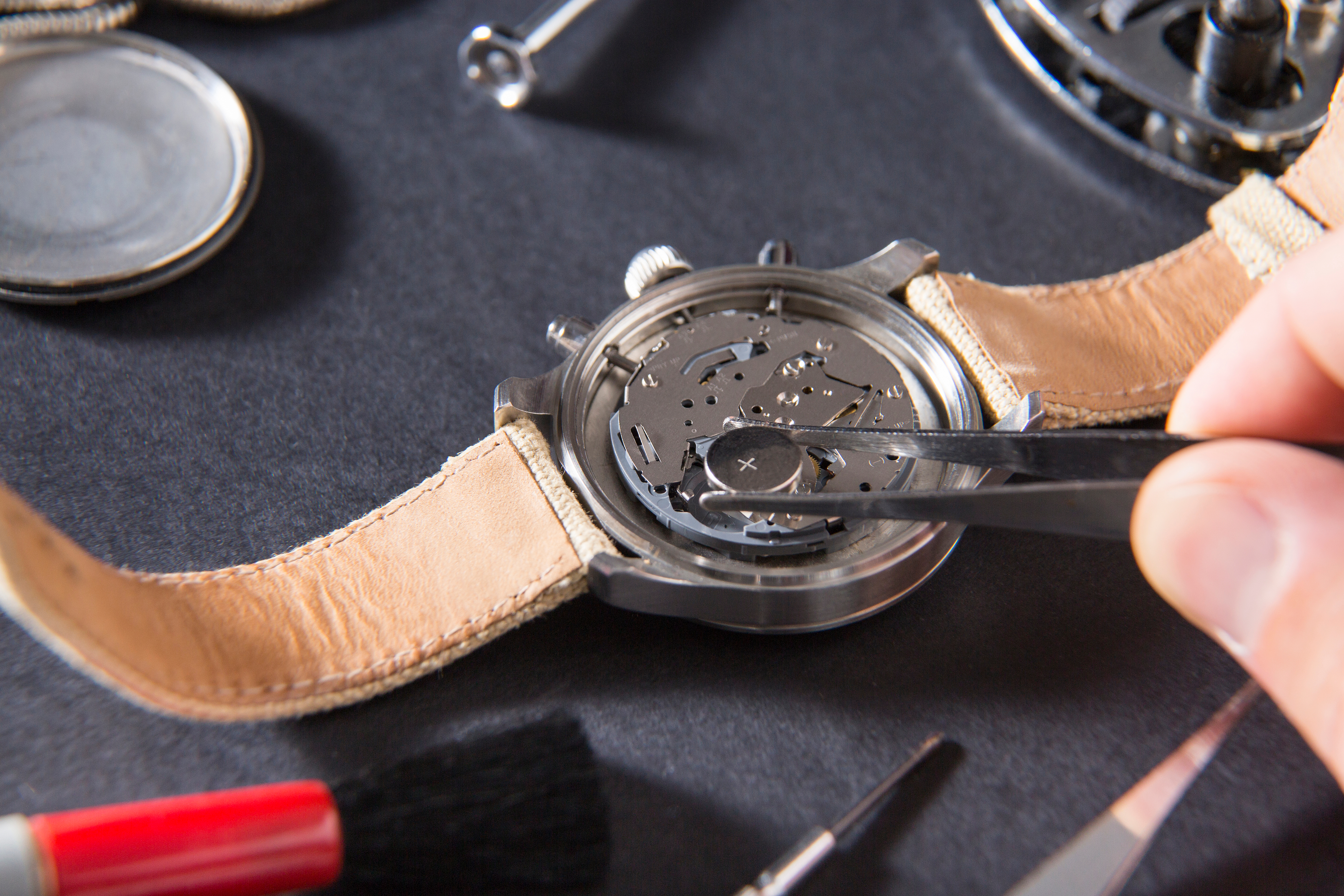
Its operation is electronic. A battery sends current to a quartz crystal that vibrates at a constant frequency of 32,768 oscillations per second. An integrated circuit counts those vibrations and converts them into impulses that a small motor translates into the advance of the hands — one crisp tick per second.
It is the most accurate type of movement, with deviations of just a few seconds a month.
By using fewer components, it also allows for lighter, slimmer watches.
Hybrid movements: Solar, Kinetic and Spring Drive
Between pure mechanics and conventional quartz lies a lesser-known third way.
Hybrid movements combine elements of both worlds, almost always with quartz regulation as their basis and a source of energy other than the traditional battery.
Solar-charged calibres turn light into electricity and store it in a rechargeable cell.
Kinetic-type movements generate that electricity by means of a rotor that spins with the wrist, as in a self-winding watch.
And the Spring Drive is the most singular case of all: it is powered by a purely mechanical mainspring, yet regulates its rate with the precision of a quartz oscillator.
How to tell which type of movement your watch has
Identifying a watch’s movement is within anyone’s reach with two quick checks.
The first is to watch the seconds hand: if it advances with a crisp tick every second, it is a quartz; if instead it glides in a smooth sweep, the movement is mechanical.
The second is to examine the piece itself. Many dials carry the inscription Automatic or Quartz, and an exhibition case back revealing a semicircular rotor gives away a self-winding calibre.
If the watch is mechanical, has no rotor and only runs when wound, it will be a hand-wound one.
Which watch movement should you choose?
There is no objectively superior movement, only the right one for each person.
Those who prioritise accuracy and being able to forget about their watch will find quartz the most practical option.
If you lean towards mechanics and value engineering in miniature, TUDOR is an excellent choice, with robust self-winding watches, manufacture calibres and a five-year guarantee.
We invite you to visit our boutique in Gibraltar, where you will receive personalised advice from our specialists.