Power reserve in watchmaking
In mechanical watchmaking, certain technical concepts directly influence the experience of wearing a watch. One of these is the power reserve, a feature that indicates how long a movement can run once it has been fully wound.
Although it may seem like a secondary detail, the power reserve helps to provide a better understanding of the autonomy of a mechanical watch and the way in which its calibre manages energy. It is, therefore, relevant information both for those who wear a piece daily and for those who alternate between different watches within a collection.
What is a watch’s power reserve?
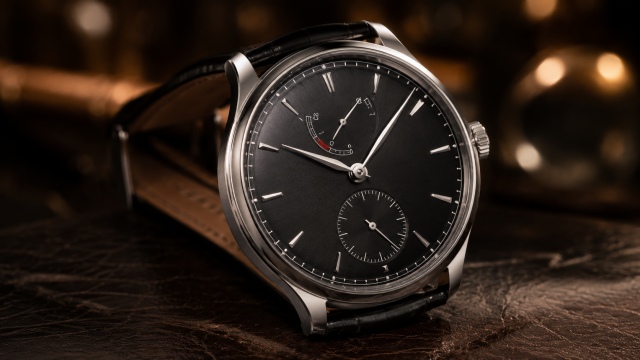
The power reserve of a watch is the length of time during which a mechanical movement can continue running when it is fully wound and stops receiving energy.
In simple terms, it can be understood as the autonomy of the mechanical watch. If a watch has an approximate power reserve of 40 hours, this means that, once fully wound, it can remain in operation for that period without needing to be wound again or worn.
When the stored energy runs out, the movement stops. In that case, it will be necessary to wind the watch again and set the time if it has remained stopped.
This concept applies mainly to mechanical watches, both manual-winding and automatic. Quartz watches also have autonomy, but this is usually referred to as the life of the cell or battery, rather than power reserve in the strict watchmaking sense.
How power reserve works
The power reserve depends on the energy stored in the mainspring, housed inside the barrel. This component acts as the energy source of the mechanical movement.
When the watch is wound, the mainspring is tensioned and stores energy. This winding can be carried out manually, by turning the crown, or automatically, through the movement of the rotor in automatic watches.
The stored energy is not released immediately. The movement transmits it progressively through the gear train until it reaches the escapement, which meters that energy into regular impulses. These impulses keep the assembly formed by the balance wheel and hairspring oscillating, which is responsible for regulating the rhythm of the watch.
As the mainspring unwinds, the available tension decreases. As long as there is enough energy to maintain stable oscillation, the watch will continue running. When that energy falls below the required level, the movement stops.
That interval between the full wind and the watch stopping is what is known as the power reserve.
How many hours of power reserve do mechanical watches usually have?
The usual power reserve in many mechanical watches is around 38-42 hours, although this figure may vary depending on the calibre, the frequency of the movement, the size of the barrel and the overall efficiency of the mechanism.
A reserve of around 40 hours may be sufficient for daily use, especially if the watch is worn regularly or wound every morning.
Reserves of 50 to 60 hours offer an additional margin, useful for those who do not always wear the same watch or who want somewhat greater autonomy.
At around 70-72 hours, the power reserve makes it possible to leave the watch unworn over a weekend and return to it, in many cases, without it having stopped.
There are also calibres with reserves lasting several days. These movements usually employ more elaborate technical solutions, such as higher-capacity barrels, multiple barrels or systems designed to optimise energy delivery.
Why power reserve is relevant
The power reserve should not be interpreted in isolation as an absolute measure of quality. A watch with greater autonomy is not necessarily superior to another with a more modest reserve. The assessment depends on the movement as a whole, its architecture, precision, finishing and the purpose for which it was conceived.
Nevertheless, it is an important feature from a practical point of view.
A watch with a larger power reserve can offer greater convenience to those who alternate between several pieces or do not wear the same watch every day. If the watch incorporates a calendar, moon phases or other complications, preventing it from stopping can be especially convenient, as subsequent adjustment may require more attention.
In luxury watchmaking, the power reserve also reflects certain technical decisions made by the manufacturer. Increasing autonomy requires balancing energy capacity, operating stability, calibre dimensions and long-term reliability.
How the power reserve is wound
In watches with manual winding, the power reserve is charged by turning the crown. As the crown is operated, the mainspring is progressively tensioned. When clear resistance is felt, it is advisable to stop in order not to force the mechanism.
In automatic watches, winding occurs through the rotor, an oscillating mass that moves with the natural gestures of the wrist. That movement is transmitted to the winding system, which tensions the mainspring again.
Some automatic watches also allow manual winding via the crown, although this depends on the calibre. If an automatic watch remains motionless for longer than its power reserve allows, it will eventually stop. To get it running again, it may be necessary to wind it manually, if the movement allows it, or to wear it so that the rotor charges the system again.
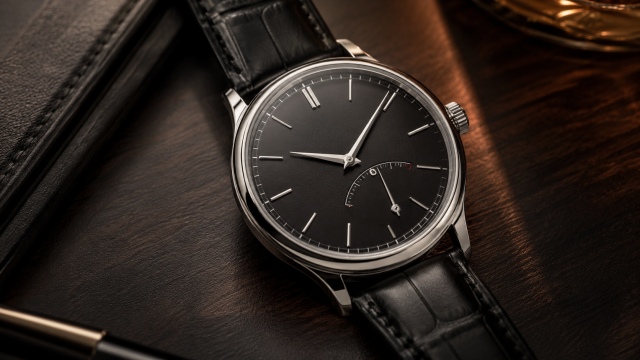
The power reserve indicator
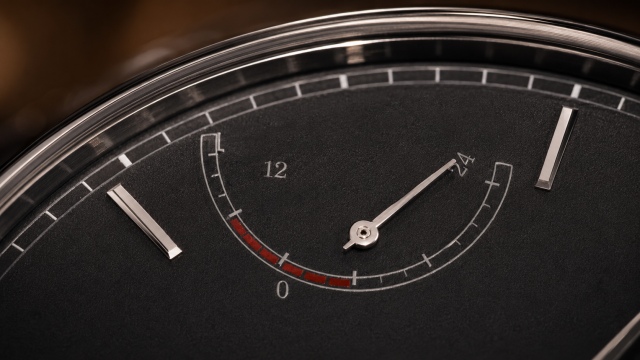
Some watches incorporate a power reserve indicator, a complication that shows how much energy remains available before the movement stops.
It may appear on the dial, by means of a specific hand or scale, or on the back of the watch, visible through the transparent case back if the design allows.
This indication is especially useful in manual-winding watches, as it makes it possible to know when it is advisable to wind the movement again. In certain pieces, moreover, the power reserve indicator forms part of the watch’s aesthetic identity and brings visual balance to the dial.
At The Red House, a watch retailer in Gibraltar since 1937, it is possible to discover a carefully curated selection of luxury Swiss watches, from classic and timeless models to sports, contemporary or watchmaking-complication pieces. A variety of styles that makes it possible to find the right watch for every way of understanding elegance, precision and the passage of time.