The moon phase in watchmaking: what it is and how it works
In watchmaking today, timekeeping tied to the observation of the sky remains present in certain complications capable of incorporating cycles that unfold at a rhythm different from that of the hours, the minutes and the seconds.
Among them, the moon phase stands out for its presence on the dial and for the mechanical work it demands.
Understanding it allows a fuller appreciation of its reading, its precision and the role it plays in today’s luxury watches.
What the moon phase is on a watch
The moon phase is a watchmaking complication that represents the visible appearance of the Moon as its cycle progresses when observed from Earth.
It makes it possible to identify approximately when the Moon is new, waxing, full or waning.
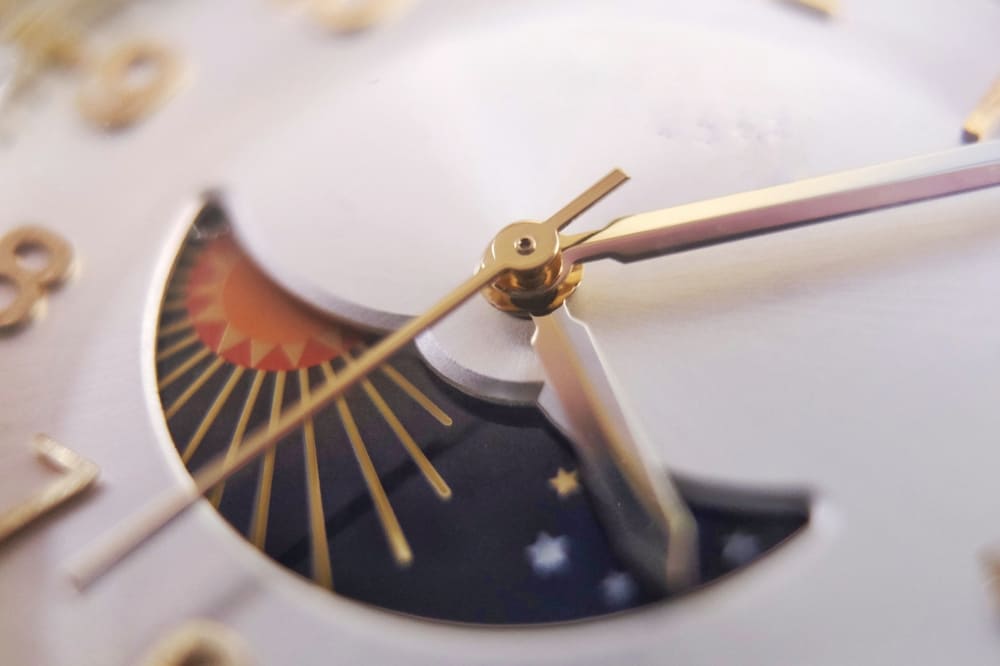
Its most common presentation consists of an aperture in the dial. Beneath it turns a disc decorated with two moons set in opposite positions.
The shape of the aperture conceals part of the disc and reveals how the image appears, reaches its fullness and gradually disappears.
How the moon phase works in watchmaking
To reproduce the lunar cycle, the mechanism takes as its reference the synodic month, that is, the average time that elapses between two identical phases of the Moon, as happens between one full moon and the next, a cycle lasting 29 days, 12 hours, 44 minutes and 2.8 seconds.
To come close to the real duration of the lunar cycle, the conventional system relies on an assembly made up of a phase disc and a 59-tooth wheel. This wheel advances by a single tooth every 24 hours, which means it needs 59 days to complete a full revolution.
Depicted on this disc are two moons set in opposite positions, an arrangement that makes it possible to simulate two lunar cycles within each rotation.
In this way, each representation travels across the indicator in approximately 29.5 days, which is half of the wheel’s full rotation.
As the disc advances, the aperture of the watch progressively reveals the lunar image: first the waxing phase appears, then the full moon once the image is entirely visible, and finally the waning phase, until the new moon is reached once again, the moment at which the cycle begins anew.
This solution rounds off the real cycle and accumulates a deviation of one day every two years, seven months and around twenty days. When that point arrives, it is enough to correct the indication manually.
The mechanisms known as astronomical moon phases use more precise ratios. A 135-tooth construction, for example, reduces the discrepancy to one day every 122 years and 46 days.
The moon phase advances while the watch is running; if a mechanical watch exhausts its power reserve and stops, the indication remains at a standstill and must be synchronised again when the watch is set running.
How to read and adjust a watch with a moon phase
Reading the moon phase depends on the design of the aperture.
In the traditional arrangement, the image appearing at one end corresponds to the waxing Moon, the fully visible disc indicates a full moon and its withdrawal towards the other side represents the waning phase. When the Moon is hidden, the indicator is approaching the new moon.
To adjust it precisely, you first need to check the date of the last full moon in a reliable astronomical source and follow the instructions of the watchmaking house, since every movement has its own procedure.
On many calibres the indicator is set to the full moon and then advanced one step for each day that has passed since that date. The adjustment can be made using the crown or a dedicated corrector, depending on the watch.
Moon phase watches in luxury watchmaking
In luxury watchmaking, this complication makes it possible to combine mechanical precision, legibility and a refined dial design.
TUDOR introduced its first moon phase complication in 2025 within the 1926 collection.
The three versions of the TUDOR 1926 Luna share a 39 mm steel case 10.1 mm thick, sapphire crystal, water resistance to 100 metres and a steel bracelet with seven rows of links.
Inside we find the T607-9 self-winding mechanical calibre, with a power reserve of approximately 38 hours, while the moon indicator sits at 6 o’clock.
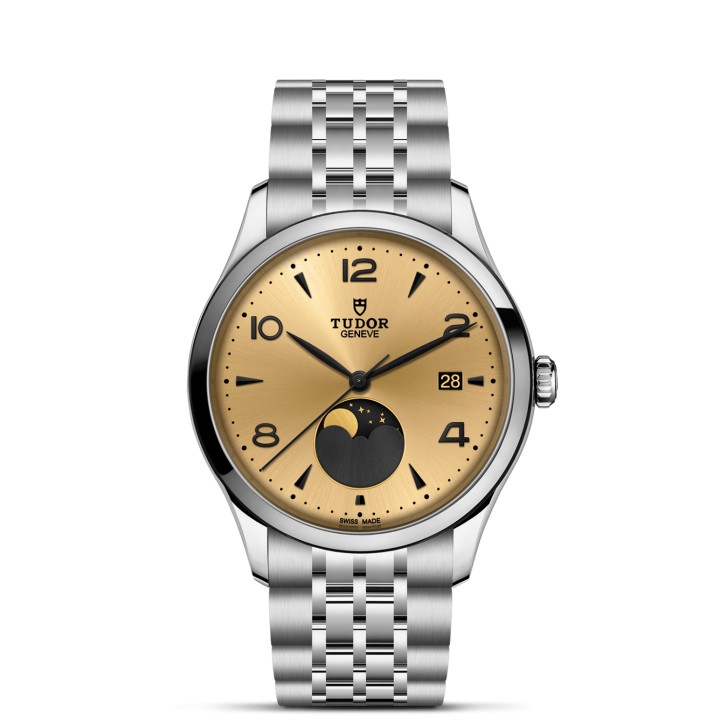
The TUDOR 1926 Luna M91560-0001 features a satin-finished champagne-coloured dial.
Its indication uses a golden disc to represent the Moon, partially covered by a black aperture.
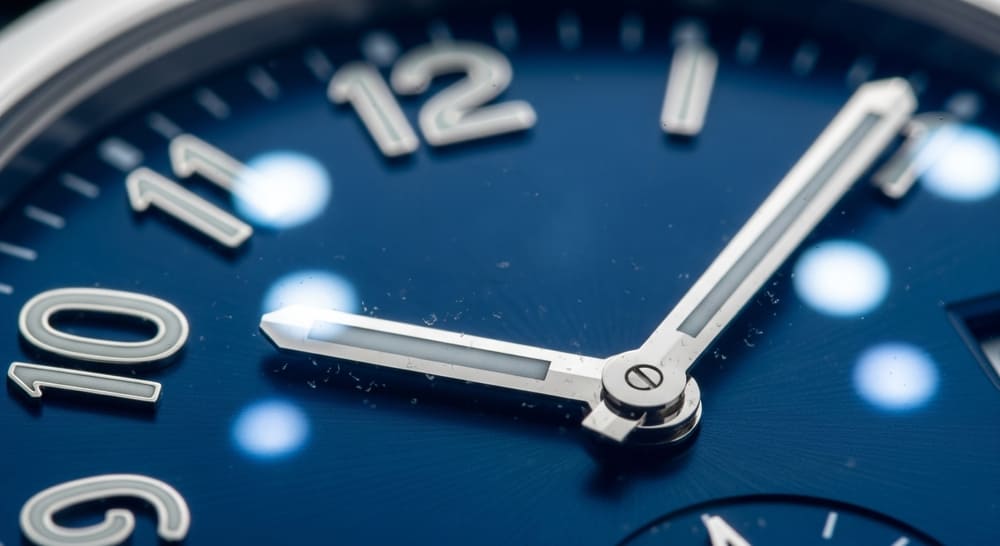
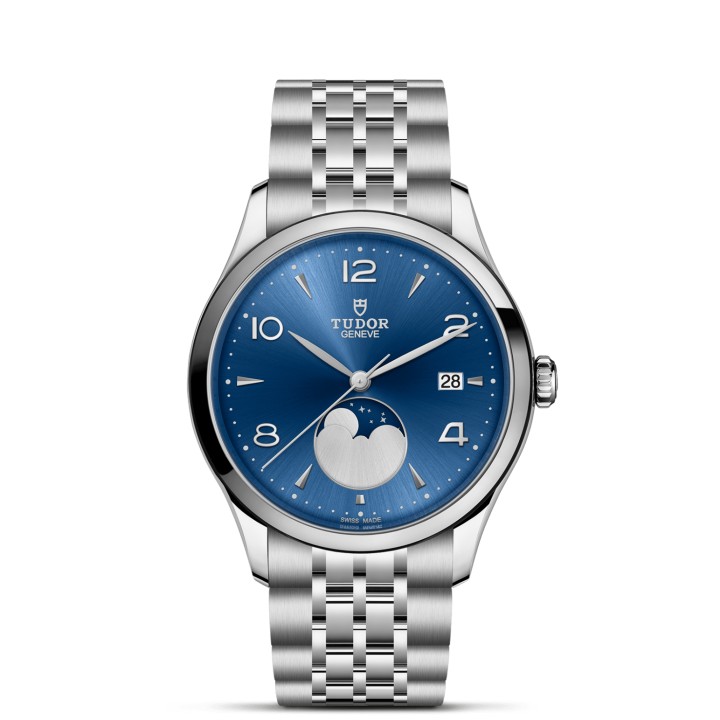
The TUDOR 1926 Luna M91560-0002 has a satin-finished blue dial with applied numerals.
The TUDOR 1926 Luna M91560-0003 carries the same architecture over to a satin-finished black dial.
In every case, the finish of the dial directs attention towards the moon phase indicator.
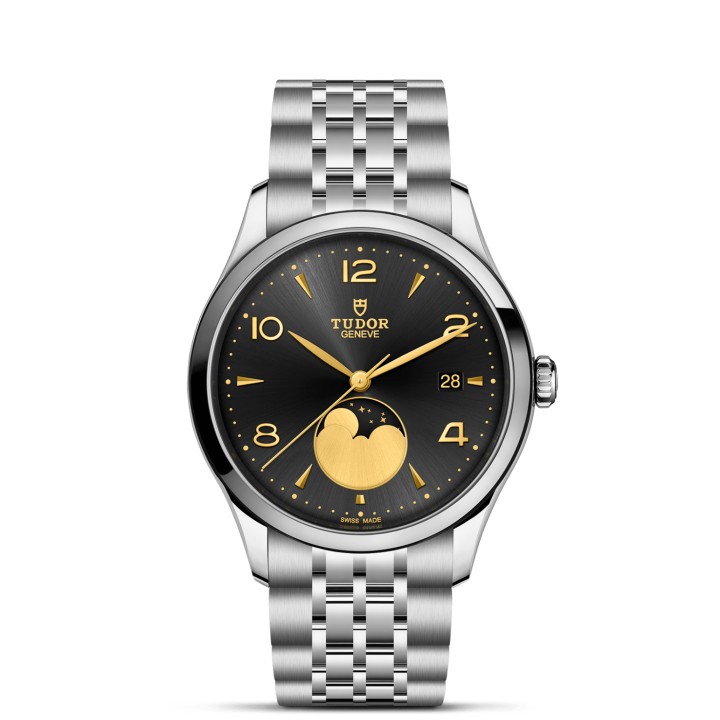
We invite you to discover the TUDOR 1926 Luna at The Red House, in Gibraltar, and to appreciate up close the details and finishes that distinguish its three references.
Our team of specialists will offer you personalised advice to guide you in choosing the model that best suits your preferences.