What is a chronograph and how does it work
The chronograph emerged in the early 19th century in response to the need to measure very short intervals with precision.
In 1816, Louis Moinet created the “Compteur de Tierces” as an instrument for measuring short periods of time, and in 1821, Nicolas Mathieu Rieussec applied it in a practical way to time races.
In this article you will discover how to identify a chronograph on the dial of a watch, what functions it offers and what happens inside the movement when you start, stop and reset the measurement.
What is a chronograph and what is it for?
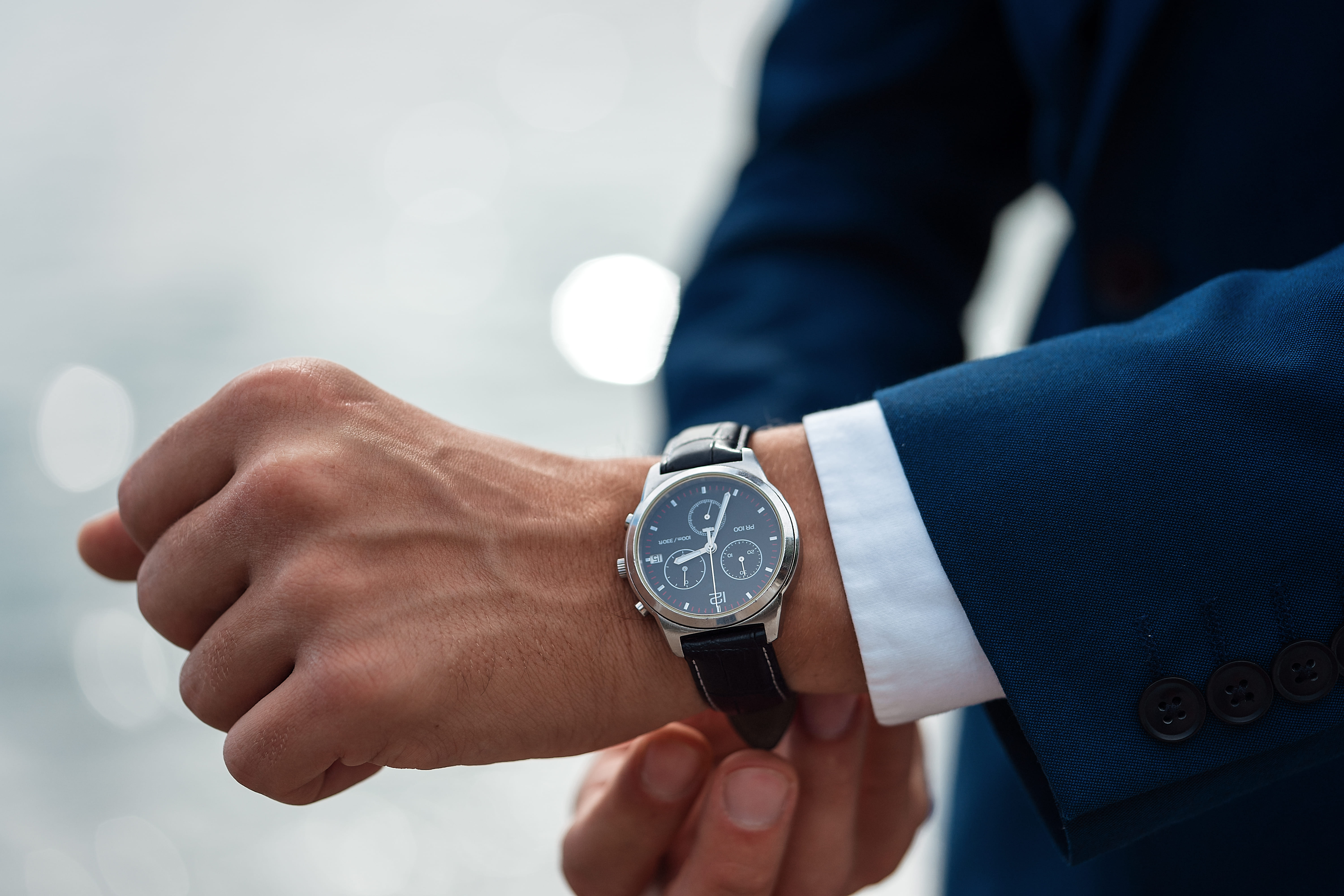
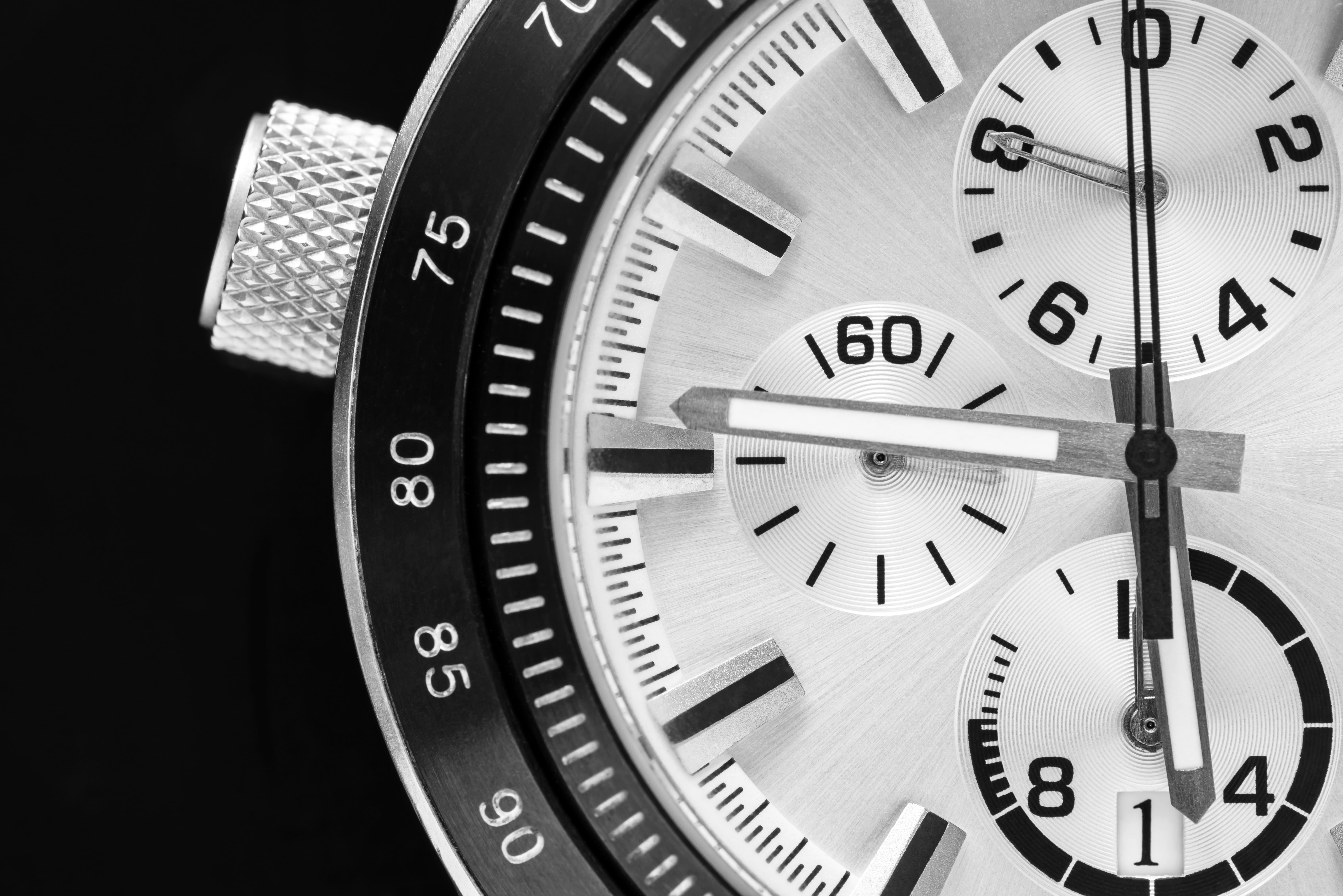
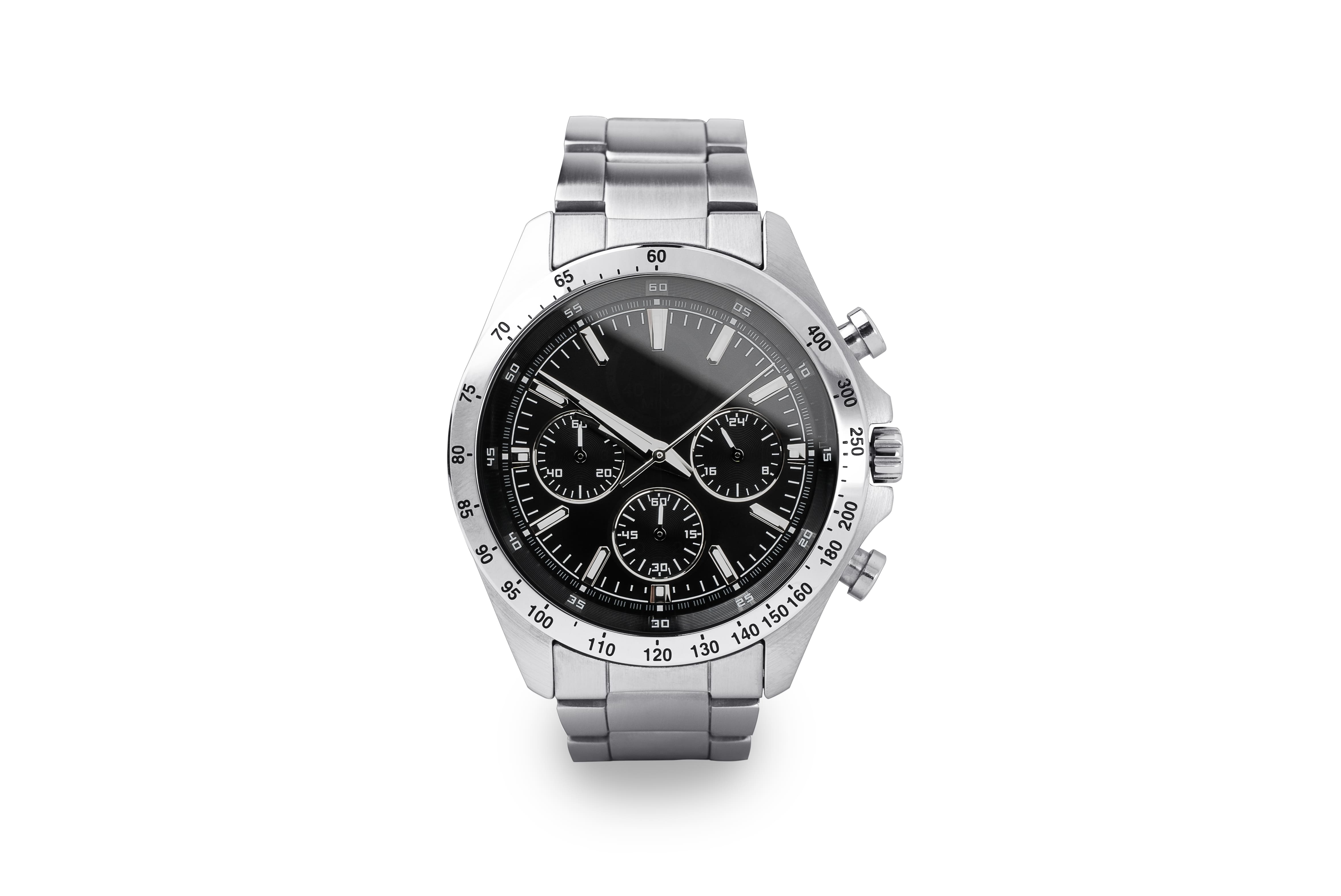
At first glance, a chronograph can be recognised by its sub-dials and by a central hand that only comes to the fore when timing is activated.
In a watch, in practical terms, the chronograph allows you to start, stop and restart a measurement using pushers.
The measurement is usually shown with a central hand dedicated to the elapsed seconds and, depending on the design, with counters for minutes and hours accumulated.
In certain models, that measurement can also be used with scales such as the pulsometer or the tachymeter, which translate the recorded time into an estimate of heart rate or average speed over a known distance.
The watch, meanwhile, continues running and its usual display of the time.
How does a chronograph work in a watch?
When you activate a chronograph, what happens is that the movement, which is already delivering energy constantly to move the hands of the time, connects for a while an additional train dedicated to timing. That connection and disconnection is the heart of the chronograph.
The sequence is easy to understand if you think of it as three actions.
When you press start, the mechanism engages the chronograph with the gear train and the chronograph’s central hand begins to move.
When you press stop, the chronograph disengages and the hand stays still so that you can read the interval.
When you press reset, the watch returns the chronograph hands to zero.
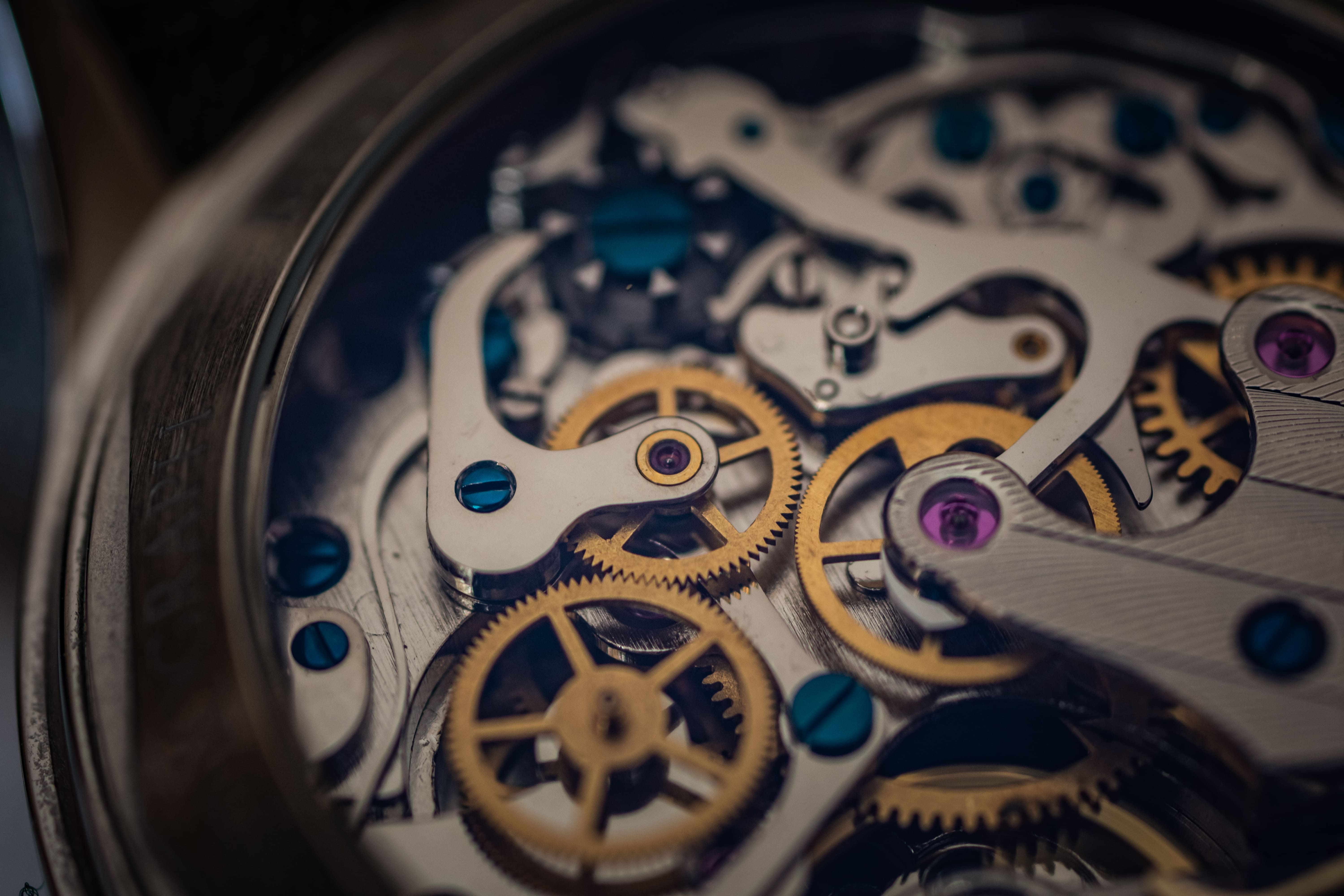
To do this, hammers fall onto heart-shaped cams attached to the shafts of the chronograph hands (seconds, minutes and, if present, hours).
Thanks to that design, it does not matter where they have stopped, when they are pushed, the cams always return to the same reference point and the hands return exactly to 12 o’clock.
For the three chronograph actions to be executed precisely and always in the same way, the mechanism relies on two assemblies.
A control system, which directs the movement of levers and springs each time you operate the pushers, and a clutch system, responsible for connecting and disconnecting the energy that drives the chronograph.
What is the difference between a chronometer and a chronograph?
The chronograph is a complication designed to measure time intervals; that is, it adds a function for timing that is used when needed and read on its dedicated indications.
The chronometer, by contrast, does not describe an additional function. It is a rating of running accuracy.
For a watch to be a chronometer means that its movement has been tested under defined criteria and meets precision tolerances, as is the case with certifications such as COSC and the ISO 3159 standard.
In practice, a watch can be both a chronograph and a chronometer if it combines the chronograph complication with an official accuracy certification, and meets the criteria of the ISO 3159 standard.
Exclusive chronographs at The Red House
Discover our exclusive watches at The Red House and get closer to a complication that combines usefulness and mechanical precision.