How to choose the perfect wedding ring?
Choosing the perfect wedding ring means finding a band capable of representing a promise and accompanying it over time. To do so, it is worth considering the meaning of the piece, its proportion, the metal, the finish, the personal details and the way it sits alongside other jewellery.
Elegance begins with the proportion of the ring
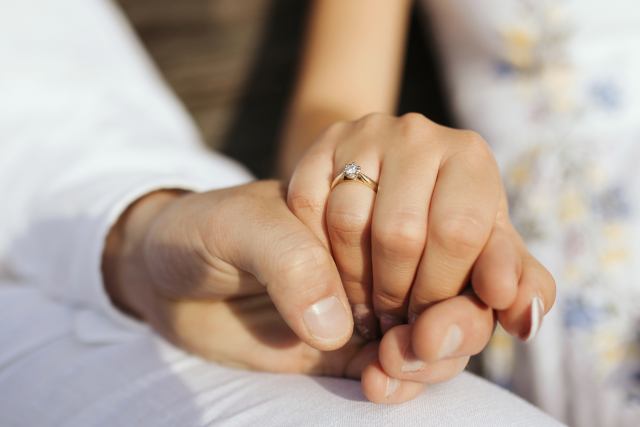
Proportion determines the first impression of a wedding band. Its width, thickness and volume influence how it is perceived on the hand, more delicate, more pronounced, more discreet or more prominent.
In a jewel intended to accompany daily life, a few millimetres matter. A fine wedding band can bring subtlety; a wider one, presence and character. The right choice lies in a measure that flatters the hand, feels comfortable and maintains a balanced presence.
Thickness completes that reading. It can bring solidity without making the piece feel heavy, or lightness without making it appear fragile. The correct thickness gives presence to the wedding band without making it heavy.
If it is worn alongside the engagement ring, proportion becomes even more important. Height, width and profile must sit together naturally so that both pieces form a coherent whole.
The choice of metal defines the character of the wedding band
The metal marks the first relationship with a wedding band: its visual temperature, its weight on the hand, the way the light reflects and the way it will change over the years. The colour of a wedding band greatly changes the feeling of the jewel; it can make it more classic, warmer, more discreet or more modern.
Yellow gold preserves the most recognisable warmth of jewellery tradition. White gold gives the piece a more contemporary sobriety, especially when it accompanies diamonds or highly refined designs. Rose gold introduces a more intimate, softer nuance, with a less obvious personality. Platinum, due to its density and naturally white tone, brings a sense of solidity very much associated with high jewellery.

Each metal gives the wedding band a different presence. For this reason, choosing the metal means deciding how you want the wedding band to feel today and how you wish to see it age over time. Colour matters, but the real choice lies in the character that metal will give to the piece.
The most valuable personalisation is often the most discreet
Personalising wedding bands does not mean changing their design completely. Very often, the most important details are those that remain on a more intimate level: a date engraved inside, initials, a meaningful word, a special finish or a small variation designed for the person who will wear the ring every day.
In a wedding band that will accompany the couple for years, every detail must add something without disrupting the harmony of the jewel.
Personalisation can also be found in details that are not immediately visible: choosing a specific metal, adding a small diamond inside the wedding band, working a soft texture or creating two different rings that share the same detail. These are discreet decisions, but they give the jewel a more personal meaning.
Ultimately, a personalised wedding band does not have to attract more attention. What matters is that it feels truly your own, that it has been created for that couple, for the way they wear it and for the story it represents.
The finish should also be considered in the long term
The finish determines how the wedding band appears in the light. A polished finish has a more classic and luminous presence, a satin finish softens reflections and gives it more discreet elegance, while a matte or artisanal texture adds character to the ring.
The choice also influences the way the jewel will live through the passage of time. Shinier surfaces reveal small marks from wear sooner, although they can recover their appearance through polishing. Satin or textured finishes integrate certain marks better, but they also change gradually in the areas with the greatest contact.
In a wedding ring, that transformation is part of the piece. The right finish should be appealing on the first day, but also feel consistent with the way the jewel will be worn, cared for and remembered.
Diamonds should bring light without disrupting harmony
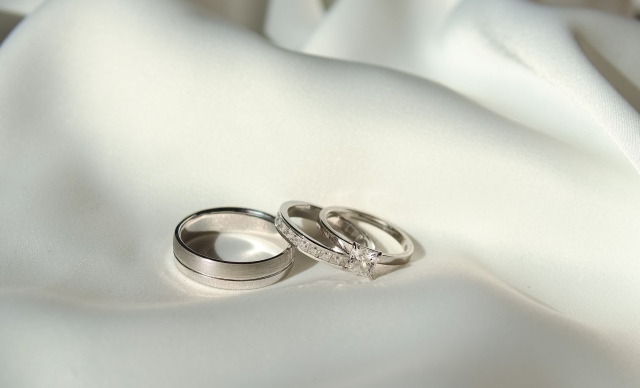
A diamond can change the reading of a wedding band with a minimal gesture. A well-positioned stone, a restrained line of brilliance or a pavé setting worked with precision is enough for the piece to gain light without losing serenity.
In a wedding band, the diamond should be integrated into the architecture of the ring. Its size matters, but so do the depth of the setting, the continuity of the surface and the way light travels across the piece. When these elements are well resolved, the brilliance accompanies the wedding band naturally.
If the wedding band is worn alongside the engagement ring, the diamonds should also respect the relationship between both jewels. They can accompany the main stone, extend its brilliance or introduce a softer contrast. What matters is that the whole feels considered, not accumulated.
The quality of a wedding ring is found in the details
The craft behind a wedding band is not always visible at first glance. It is often found in quiet details: the smoothness of the interior, the precision of the profile, the balance of the weight, the uniformity of the finish or the way the metal has been worked to preserve its beauty over time.
At The Red House, jewellers in Gibraltar since 1937, every wedding ring is born from that attention to detail. The selection of materials, artisanal care, precision of the finishes and guidance throughout the process make it possible to create wedding bands designed to last. Each piece is made in 18 ct gold, with options in yellow gold, white gold, rose gold or in a combination of rose and yellow gold, as well as platinum jewellery. We invite you to discover our catalogue of luxury jewellery.