The most appreciated watchmaking complications in haute horlogerie
Watchmaking complications represent the pinnacle of mechanical watchmaking. They are additional functions to the indication of hours and minutes that show how far precision can go when applied to time. Each one shows an absolute mastery of microengineering and knowledge accumulated over centuries.
Among the most recognised are the tourbillon, the perpetual calendar, the minute repeater, the chronograph, the dual time zone (GMT), the power reserve and the moon phases, fundamental pillars of contemporary watchmaking art.
Tourbillon
The tourbillon was conceived by Abraham-Louis Breguet in 1795 to counteract the effect of gravity on the balance wheel and the escapement, the organs that regulate the rhythm of the watch. Its principle consists of mounting both elements inside a rotating cage, generally turning once per minute. This compensates for the positional variations of the watch and improves rate stability.
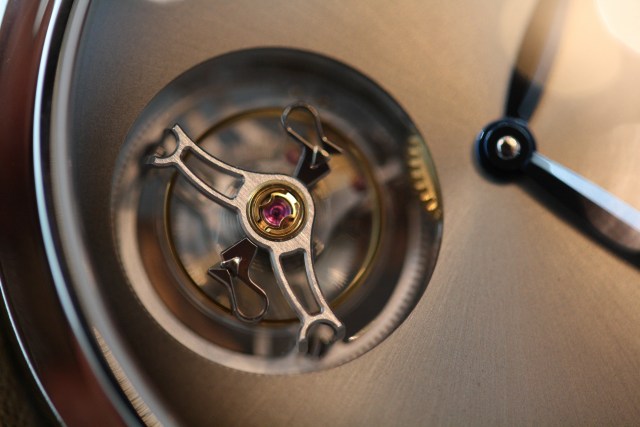
The execution of a tourbillon requires maximum precision, each component measures barely a few millimetres and its weight may be less than one gram. Today, beyond its technical function, it is considered a display of virtuosity, visible through the dial or on the back of the movement, where its hypnotic rotation demonstrates the artisanal level achieved by Swiss haute horlogerie.
Perpetual Calendar
The perpetual calendar is one of the most complex complications that a watch can contain. Its system is designed to show the correct date taking into account the different months of the year and leap years, without the need for corrections for decades. This is achieved through a set of programmed cams and wheels that mechanically reproduce the Gregorian calendar.
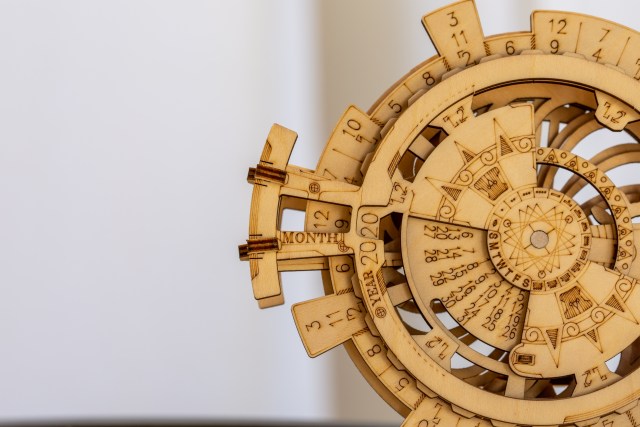
The precision of the mechanism allows differentiation between months of 30 and 31 days and automatically jumps from 28 February to 1 March in non-leap years. Only in 2100, when the calendar will experience a historical exception, will a manual adjustment be necessary. Due to its complexity and the number of components involved, the perpetual calendar is usually found only in limited production watches, assembled by the most experienced masters.
Minute Repeater
The minute repeater is one of the most spectacular complications in traditional watchmaking. It allows the time to be known through sound; a system of hammers and gongs inside strikes different notes to indicate the hours, quarters and minutes. When the side slide is activated, the mechanism triggers a perfectly synchronised sound sequence corresponding to the time shown on the dial.
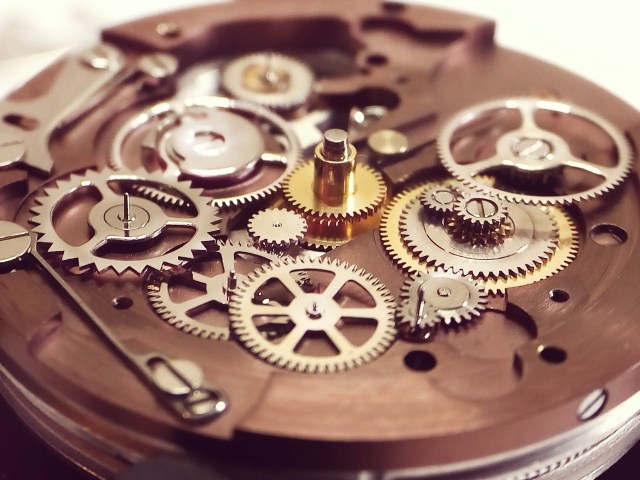
The adjustment of a minute repeater requires meticulous work. The purity of tone, the duration of sound and the resonance of the case depend on the quality of the steel, the thickness of the gongs and the internal space available. Each piece is unique because the tuning is done by hand, which makes this complication an example of acoustic precision and mechanical art.
Chronograph
The chronograph measures time intervals independent of the main function of the watch. Through one or more pushers, it is possible to start, stop and reset a central hand that travels across the dial. It is a complication widely used in sports watches, aviation or technical use, where accuracy in time measurement is essential.
High-end chronographs incorporate systems such as the flyback, which allows timing to restart with a single touch, or the rattrapante, which uses a double hand to record split times.

The coordination between clutches, columns and springs requires extremely precise assembly. For its practical usefulness and balance between engineering and design, the chronograph remains one of the most popular complications in modern watchmaking.
Dual Time Zone (GMT)
The GMT complication —acronym for Greenwich Mean Time— shows simultaneously the time in two different time zones. Its development responded to the needs of travellers and pilots during the expansion of aviation in the 20th century. The system uses an additional hand that completes one rotation every 24 hours, together with a bezel or secondary scale indicating the second time zone.

In watches with dual time zone, the mechanism must keep both references perfectly synchronised. The most advanced models allow the local hand to be adjusted without stopping the main movement, something essential to maintain accuracy. It is a practical and reliable complication, adopted both by exploration watches and by pieces of classic style.
Power Reserve
The power reserve indicator informs about the energy available in the mainspring, showing how long the watch can operate before stopping. This reading is made through a hand or indicator that moves forward or backward as the spring winds or unwinds.
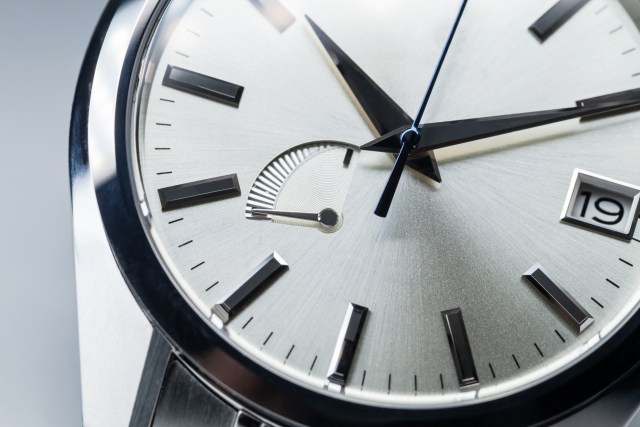
Its function is especially useful in manual-winding watches, where the user must wind periodically to maintain accuracy. In automatic movements it also provides information about the rotor’s winding level. Beyond its usefulness, the power reserve provides visual balance to the dial design and allows one to know the state of the movement’s winding at all times.
Moon Phases
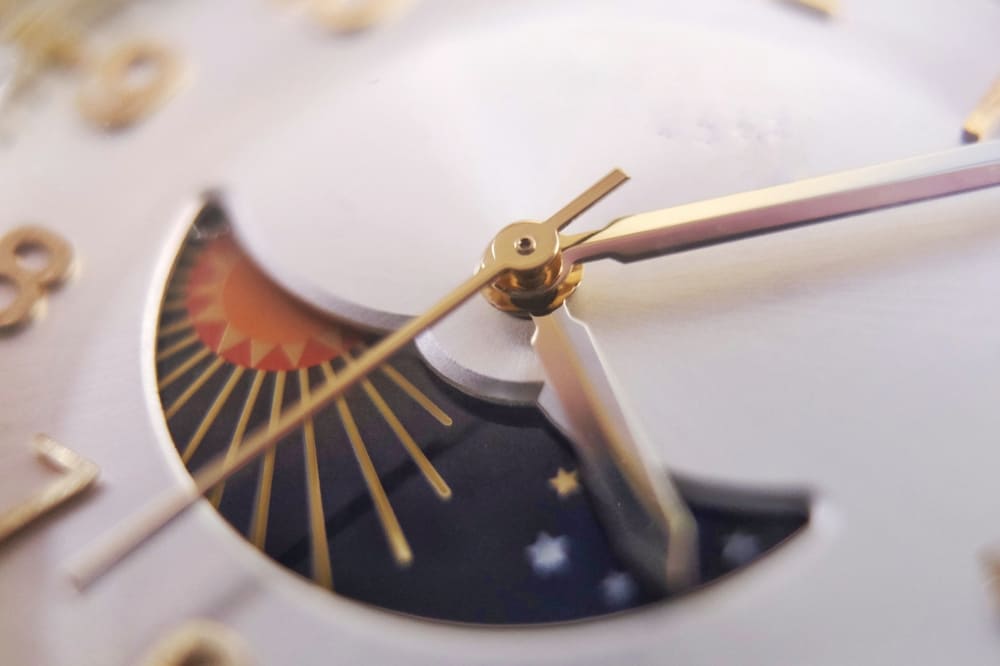
The moon phase complication reproduces the cycle of the Earth’s satellite over its 29 days, 12 hours and 44 minutes. The mechanism uses a disc decorated with two moons that advances one tooth every 24 hours, reflecting the different stages of the cycle: new, waxing, full and waning.
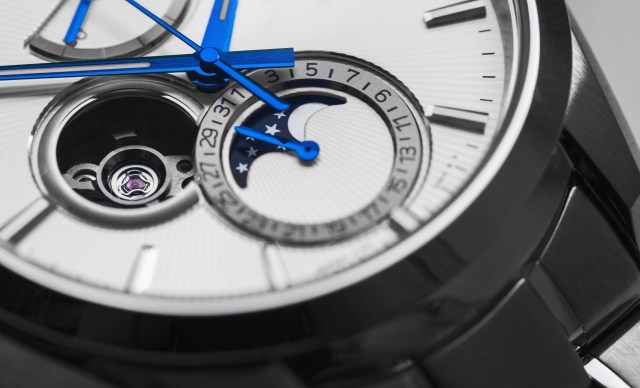
In high-end watches, the system is calculated with such accuracy that the total deviation can take more than a century to accumulate a single day of error. In addition to its technical complexity, its aesthetic value is unquestionable; many manufactures decorate the disc with enamel, mother-of-pearl or gold dust to enhance its appearance. For its balance between technique and poetry, it remains one of the most representative complications of artistic watchmaking.
Swiss watchmaking in Gibraltar
If you are looking for a place to acquire Swiss watches in Gibraltar, you can visit The Red House, at Main Street 68-70. We are official distributors of Rolex and Tudor and offer personalised attention that will allow you to find the perfect watch within a specialised and trustworthy environment.